A Winter Walk Along a Field Edge
A winter walk along a field edge can sharpen your eye for ground, light and seasonal change, with simple notes that keep observations clear and safe.
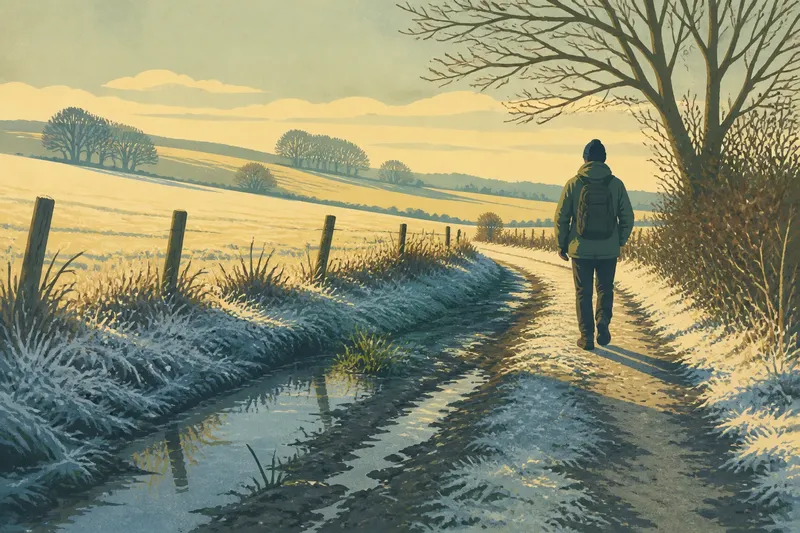
On a cold morning, a strip of wet ground beside a public path may hold the clearest record of last night’s weather: shallow puddles, flattened grass and a thin crust of frost in the shade. A winter walk along a field edge offers a chance to read such seasonal clues without leaving the route or disturbing the land.
Take a pocket notebook and pencil, or use a phone to make a brief note or photograph where permitted. Choose a public path, follow local signs, and treat every detail as an observation rather than proof of a cause. That distinction makes it easier to notice change without guessing.
Start with the ground beneath the path
Winter weather often leaves visible traces on the path itself. Look for water gathered in shallow dips, mud pressed into footprints, frost lingering in shade, or leaves caught against a low rise. Describe the pattern and position first; avoid assuming exactly when it formed or what lies beneath the surface.
Compare exposed and sheltered places from where you are allowed to stand. A sunny stretch may look dry while a shaded hollow remains wet, but the contrast can have several causes, including recent rain, drainage and foot traffic. A careful note might say, “The shaded dip is wet; the open stretch is firmer.”
Notice seasonal signs beyond the path
Winter changes what is visible across a field. Bare trees can reveal a distant slope or stream, while standing vegetation may show where wind has pressed it down. Look for broad patterns from the path, and do not cross a field or approach wildlife to get a closer view.
Plants offer useful clues even when you cannot identify them. You might notice seed heads still standing, low leaves close to the ground, or buds on a branch. If a plant name is uncertain, record its shape or position instead of forcing an identification.
Read the weather in light and water
Low winter light changes the appearance of slopes, puddles and vegetation. Side-light can make ridges and footprints easier to see; flat cloud can soften shadows and make the whole scene more even. Note where light falls, rather than trying to judge its strength by eye.
Water also helps describe recent conditions without requiring a weather forecast. A wet track, droplets on grass or a puddle reflecting the sky are visible facts; they do not, on their own, tell you how much rain fell or when. If the surface is slippery or visibility is poor, prioritise a safe route over a particular observation.
Make a short record you can compare later
A useful note connects a place, an observation and a question for another visit. Include the path or viewpoint, the condition of the ground, one seasonal sign and the weather or light you can see. Keep interpretations separate: write “water pooled in the hollow” rather than “the drain is blocked” unless you have direct evidence.
Say you are walking a permitted path past a shallow dip after overnight rain. You note that the centre holds water, the nearby grass is flattened towards the track, and the dip remains shaded while the next rise is bright. On a later visit, you return to the same spot and find the dip dry but the grass still pressed down; the comparison tells you that the water was temporary, while the flattened growth has lasted longer.
- Path surface: Check whether it is firm, muddy, icy or waterlogged; if footing is secure, continue carefully, but if it is slippery or unstable, turn back or choose another permitted route.
- Shallow hollows: Check for standing water; if water is present, note its position and avoid stepping into it, but if the ground is dry, record that condition without inferring why it changed.
- Shade and light: Check which parts of the path or field are shaded; if a feature is hard to distinguish, describe it as unclear and revisit in suitable light, but if it is visible, record its shape and position.
- Plant signs: Check for buds, seed heads or flattened growth from the route; if the plant is uncertain, describe its form without naming it, but if its identity is clear to you, note the name as an observation.
- Visibility: Check whether mist, rain or fading light obscures the route; if you cannot see a safe way ahead, turn back, but if the path remains clear, continue only while conditions feel manageable.
- Access signs: Check for gates, closures and local notices; if a route is closed or access is unclear, follow the notice or choose a permitted alternative, but if access is open, remain on the marked path.
How should you record a winter walk?
Keep the record brief and factual: note where you stood, what you saw, and what remains uncertain. A small sketch can show where a puddle, slope or line of vegetation sits in relation to the path; it does not need to be a map.
Do I need to identify every plant?
No. A description such as “low green leaves beside the wet hollow” can be more dependable than an uncertain name. Use a field guide only when you have a clear view and can check the relevant features without touching or collecting the plant.
Can I take photographs from a public path?
Follow local signs and any restrictions, and take photographs from the route rather than leaning over a fence or entering a field. A short written note about the viewpoint helps explain what the photograph shows.
What should I do if the path is muddy or icy?
Use common sense and assess the footing before continuing. If the surface feels unsafe, turn back or choose another permitted route; for a serious access or safety concern, follow local guidance or ask the relevant land manager.
When should I return to compare observations?
Return when it is safe and access remains open; there is no need to follow a fixed schedule. Revisiting after a change in weather can help you distinguish temporary signs, such as pooled water, from features that remain visible.
Leave the route undisturbed
Do not pull plants, move stones or enter a field to improve a view. Keep gates as you find them, give other path users room, and avoid disturbing animals. Local access rules differ, so follow signs and land-manager guidance.
For a winter walk along a field edge, the most useful final note may be a question tied to one exact place: is the shaded hollow still holding water, or has the ground dried? That gives your next visit a clear point of comparison while leaving the landscape untouched.