The Parish Year and the Work of the Land
The parish year linked rural work to shared customs and seasonal tasks, revealing how calendars organised community life without setting every farm’s schedule.
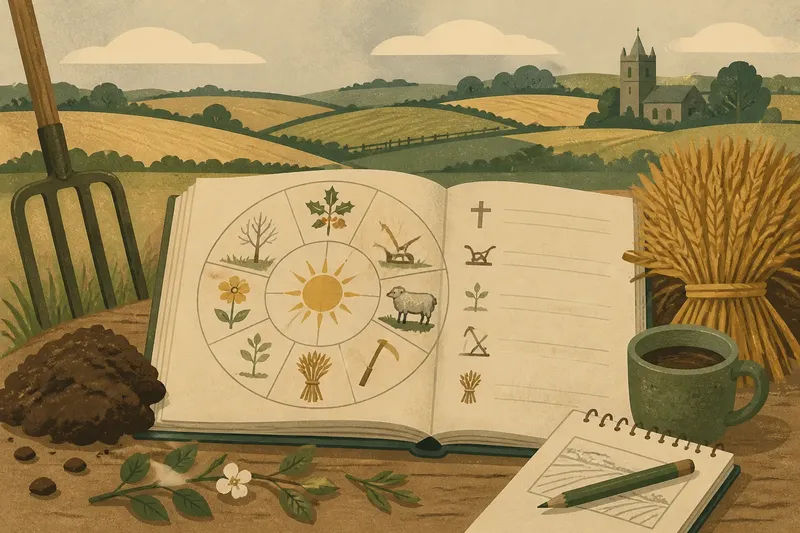
A parish calendar might place ploughing or haymaking beside a feast day, but the entry did not mean every farm began work on that date. The parish year linked rural work to a shared way of naming time, while each household faced its own fields, crops and working demands.
Historical calendars differed by place and period, so no single pattern describes every rural community. Where a calendar records observances alongside tasks, it can show how religious and agricultural time were set next to one another; it cannot, by itself, prove that all neighbours followed the same custom.
Daylight framed the working year
In winter, shorter days limited the time available for outdoor work. As daylight lengthened, people had more hours for tasks such as moving between fields, tending animals and preparing ground.
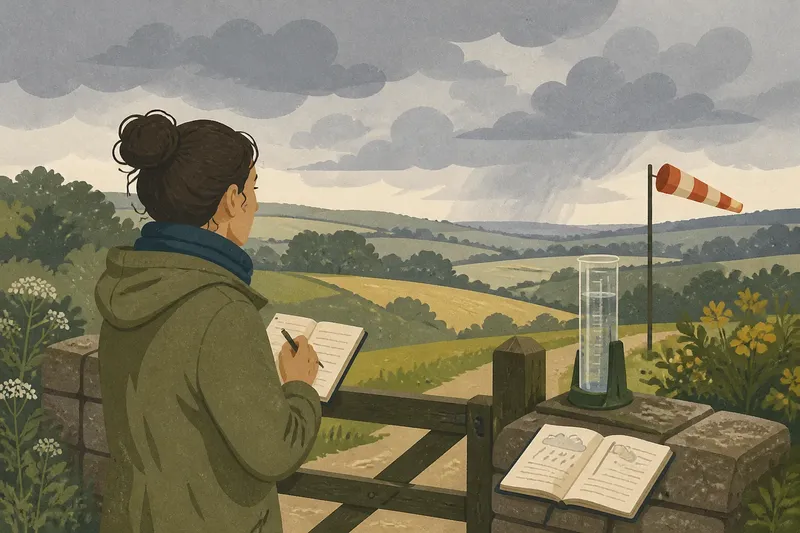
But the length of the day was only one part of the decision. A long evening could not dry a waterlogged field, and a bright morning might still leave the ground hard after frost. A calendar placed work within a broad seasonal frame; daily conditions shaped what could actually be done.
Fieldwork depended on the condition of the ground
Ploughing and sowing called for soil that could be worked without causing unnecessary damage. Wet ground could become rutted or smeared underfoot or under equipment, while very dry soil could be difficult to break into a suitable seedbed.
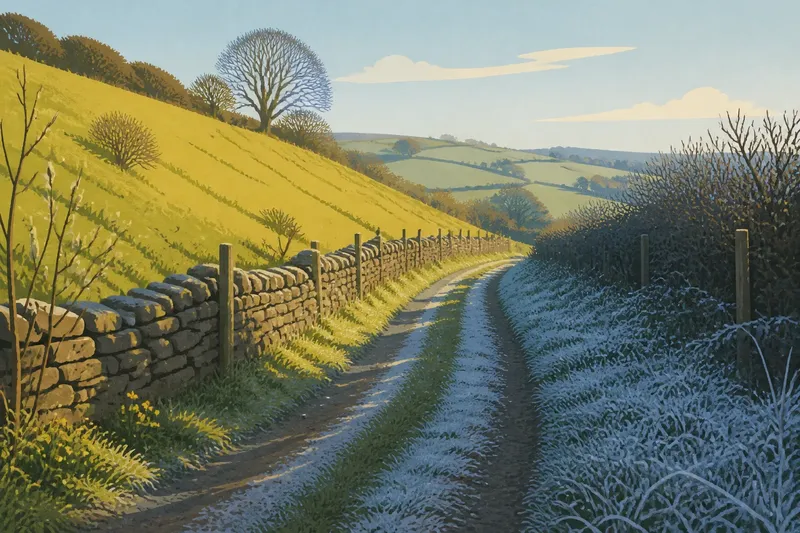
Fields close together could differ. A slope with good drainage might be ready before a heavier plot lower down, so a broad seasonal entry could not settle the question for every piece of land.
Say a farmer has a lower field with standing water and an upper field whose surface has begun to dry. The farmer postpones work on the lower ground and turns first to the upper plot; the expected result is less disturbance to the saturated soil and useful work on the field that is ready. This invented situation shows how a calendar could provide context without dictating the order of work.
Sowing joined seasonal custom to crop needs
Sowing depended on the crop, the field and the conditions in which seed could begin to grow. A calendar might point to a customary season, but it could not name one suitable day for every seed or every holding.
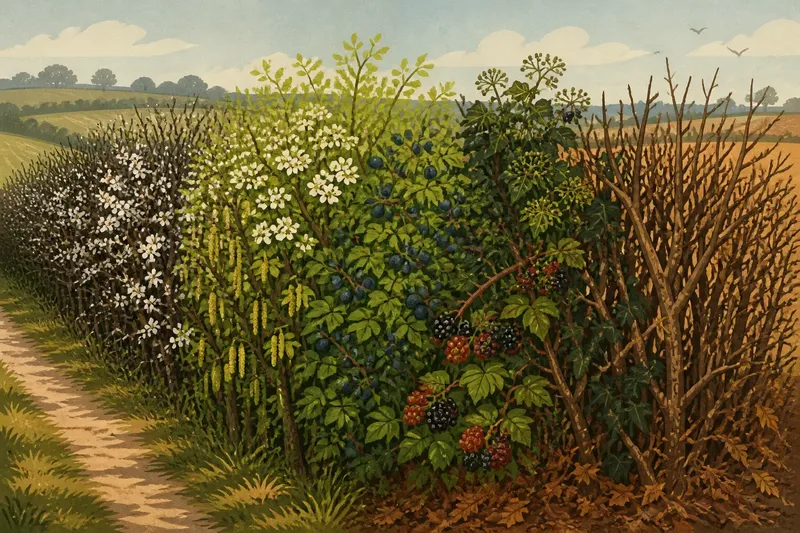
People could also notice buds opening, grass greening or familiar wild plants appearing. Such signs helped mark the season’s progress, but a sheltered bank might show growth before an exposed field did; the land still needed to be judged locally.
Haymaking required a workable sequence
Haymaking involved more than cutting grass. The crop had to dry before it could be gathered and stored, so a spell of unsettled weather could interrupt the sequence.
Cutting, turning and gathering also called for labour and co-ordination. A calendar could identify the part of the year when hay work was expected, while the grass, available help and weather shaped the actual pace.
Harvest brought several kinds of work together
Harvest was a period of linked tasks rather than a single moment. Crops ripened at different times, and fields within one parish could vary in exposure and soil, leaving each household to judge its own crop.
Once cutting began, gathering and storage followed. The work depended on what was ready, the weather ahead and the labour available, so a named harvest season described a busy stretch rather than a precise boundary between parts of the year.
Shared observances gave communities reference points
In some historical parish calendars, religious observances and agricultural tasks appear within the same annual framework. A feast day could serve as a familiar reference point for discussing the year, but the calendar alone cannot establish how widely a particular custom was followed or whether work took place on the observance itself.
That shared language could make recurring demands easier to anticipate. It did not erase differences between farms: crops, soil, household labour and local practice all affected how the year unfolded.
How did the parish year connect customs and farm work?
Why do parish calendars include feast days?
In calendars that record them, feast days provide familiar points in the annual cycle and may appear alongside seasonal tasks. Their presence does not show that work always began on that date or that every community used the same conventions.
Did every farm follow the same parish year?
No single calendar should be treated as a rule for every farm. Soil, crops, exposure, household labour and local customs could all produce different working patterns within the same area.
What can entries for ploughing or haymaking tell us?
They can indicate which tasks mattered within the calendar’s account of the year and how those tasks were associated with a season. They do not establish the exact day a particular field was worked or how consistently the entry was followed.
What does the parish year tell us about rural life?
It can show how a particular calendar placed work and observance within a shared annual structure. Read with care, it offers evidence of a way to organise time, not a complete record of every household’s experience.
When reading a parish year, keep the calendar’s evidence separate from what it leaves unstated: an entry may name a task or observance, but not the field, the weather or the household that acted on it. That distinction makes it easier to see both the shared framework and the local decisions hidden behind a date.