The Countryside Does Not Change at One Speed
Learn how aspect, elevation and shelter shape countryside seasonal change, with a simple method for comparing nearby places and recording what you see.
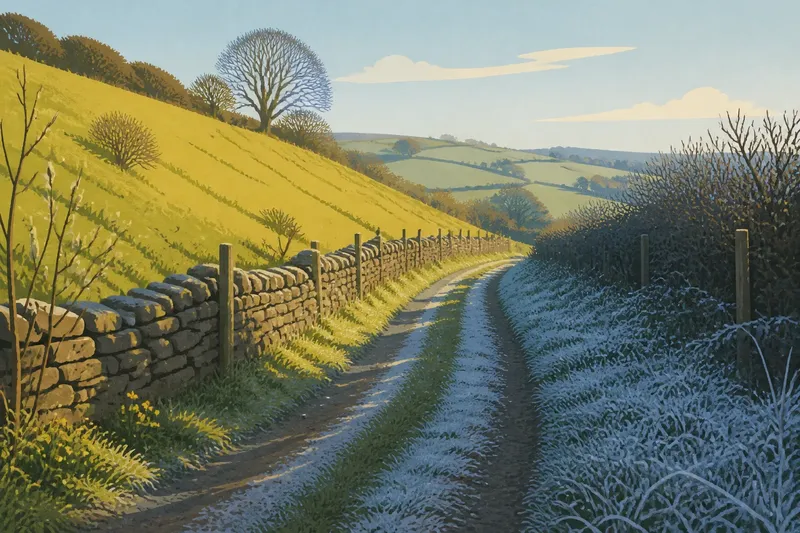
Why can a sunny bank be soft underfoot while the lane beside it is still frosty? Countryside seasonal change is shaped by the ground’s exposure: slope direction, height and shelter can make nearby places respond differently to the same weather.
Aspect helps explain contrasts between slopes
Aspect means the direction a slope faces. In Britain, a south-facing bank often receives more direct sunshine than a north-facing one, especially when the sun sits low. The extra light can warm the surface, while shaded ground nearby remains cool.
Compare opposite sides of one lane and look for specific signs: frost remaining in grass, damp soil, or buds beginning to open. A sunny slope exposed to cold wind may still feel less mild than a shaded but sheltered spot, so note both slope direction and surrounding conditions.
Elevation matters, but it cannot explain a place on its own
Higher ground is often cooler than nearby low ground. An exposed rise may show later growth than a sheltered hollow, though a sunny upper bank can respond sooner than a shaded dip below it.
Give each observation a precise location. “Upper track beside the stone wall” is easier to revisit than “the hill”, and helps distinguish a recurring local pattern from a general impression.
Landforms and barriers alter wind and cold-air movement
A hedge, wall or fold in the land can block wind. Yet shelter does not always mean warmth: a hollow may collect cold air, while a damp, shaded corner can stay cool even when the wind is slight.
Look for frost that lingers after nearby ground has cleared, or grass that bends and dries sooner in an exposed place. Treat these as observations, not proof of a single cause; shade, moisture and wind can act together.
Imagine you visit a farm track after a clear night. Your starting notes are a south-facing bank beside a stone wall, an open north-facing verge, and frost still visible on the verge. You record the slope direction, wall, shade and frost separately, then revisit both spots after another clear night. If frost clears first beside the wall, shelter or sunlight may help explain the difference; if it remains there, the wall alone is not a sufficient explanation, and shade or ground shape may matter more.
Make a nearby comparison that can be repeated
Choose two places close together that differ in one obvious feature, such as a sun-facing and shaded slope or an open verge and a sheltered corner. If height, soil, vegetation and exposure all change at once, you will not know which contrast might account for the signs.
Use a pocket notebook, a phone note or a map pin to keep the locations clear. Record the date, time, sky, recent rain if known, and one visible sign. “Hazel buds opening beside the gate” is more useful than “spring is early”; a photograph from the same viewpoint can help you compare later.
- Check whether the slope faces towards or away from the afternoon sun; if one side is brighter, compare its frost or soil with the shaded side, otherwise note that aspect may not explain the contrast.
- Check whether the spot is on a rise, slope or hollow; if it lies low and frost persists, compare it with higher ground, otherwise look to shade or wind exposure.
- Check for a wall, hedge, building or woodland edge; if it blocks wind, note whether the ground is also shaded, otherwise treat exposure as a possible factor.
- Check whether the soil is damp or dry; if the two sites differ, keep moisture separate from your explanation, otherwise compare their vegetation and shade.
- Check for frost in grass and on nearby surfaces; if it remains in one place, record the time and compare again later, otherwise note that both spots have cleared.
- Check whether the same plant shows a visible change at both sites; if its buds differ, revisit from the same viewpoint, otherwise choose another clear sign such as frost or soil dampness.
These notes describe local conditions rather than predict the weather. Keep what you saw separate from what you think caused it, and revise the explanation if a later visit points elsewhere.
What questions help explain nearby differences?
Which side of a slope is likely to receive more sun?
In Britain, south-facing slopes often receive more direct sunshine than north-facing slopes. Check the ground and plants as well as the direction, because wind and shade can alter what you see.
Why might a hollow keep its frost longer?
Cold air can settle in low ground, so frost may linger there after a nearby bank clears. Compare the hollow with a higher spot and note whether either is shaded or sheltered.
Does a wall or hedge always make a spot warmer?
No. A barrier can reduce wind, but it may also cast shade, and land shape can trap cold air nearby. Record these features separately rather than treating shelter as a simple warmth signal.
How should I compare the same places on another visit?
Return to clearly named spots and record the same kind of sign, such as frost remaining or buds opening. Note the conditions and keep your interpretation separate so you can adjust it when another factor becomes apparent.
Read the land before assigning a season to it
A broad seasonal label describes a period, not every patch of ground within it. One walk may reveal new growth on a sunny bank, bare stems on a shaded rise and frost in a hollow; these observations can all be accurate.
For countryside seasonal change, the useful habit is to revisit a precise place and record what is visible before explaining why. The location often matters as much as the date: a small hollow, a shaded wall or an exposed verge can account for differences a broad seasonal label cannot.